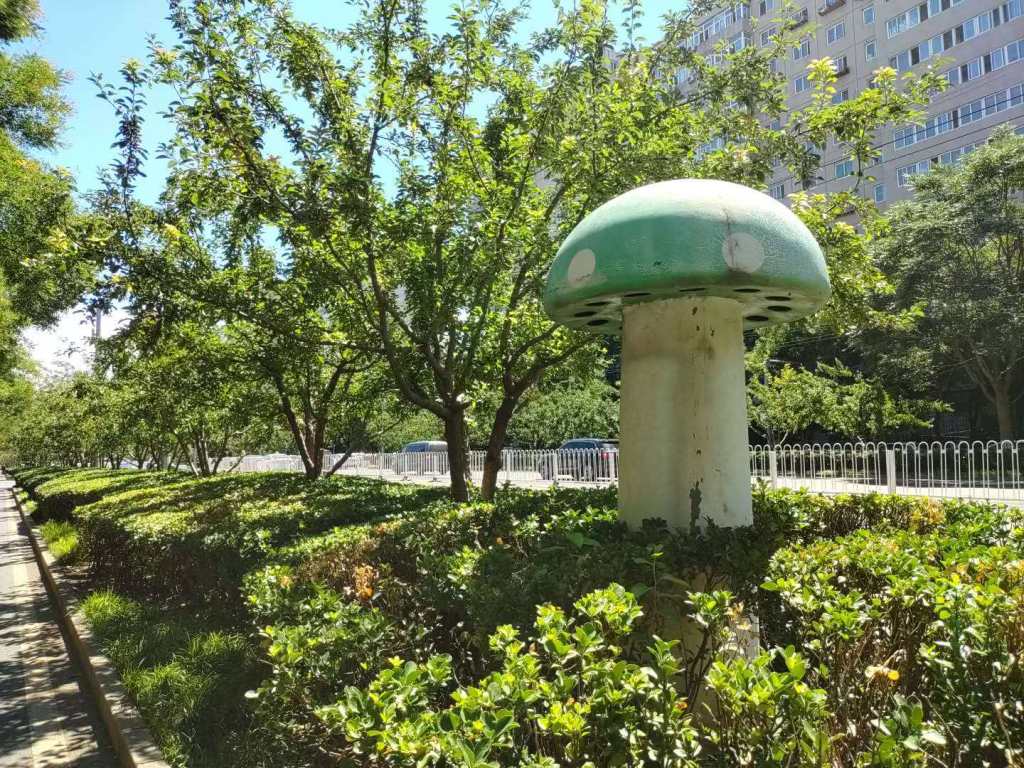
If you’ve traveled to Beijing before, you’ve probably noticed them but paid them no mind – integral parts of the city’s infrastructure whose purpose has been somewhat forgotten. And yet, the mushroom vents of Beijing have become living legends.
I first became aware of the vents – white tubes topped with green or red domes with holes on the underside that churn out steam in winter – when I stumbled across a zine detailing the mysterious vents titled Beijing Mushroom Field Guide (北京蘑菇寻找指南 Běijīng Mógū XúnzhǎoZhǐnán, updated copy pictured below), written by a certain Yu Gong. Inside was a detailed map showing where vents could be found, and even stickers you could doodle on and paste on the objects.
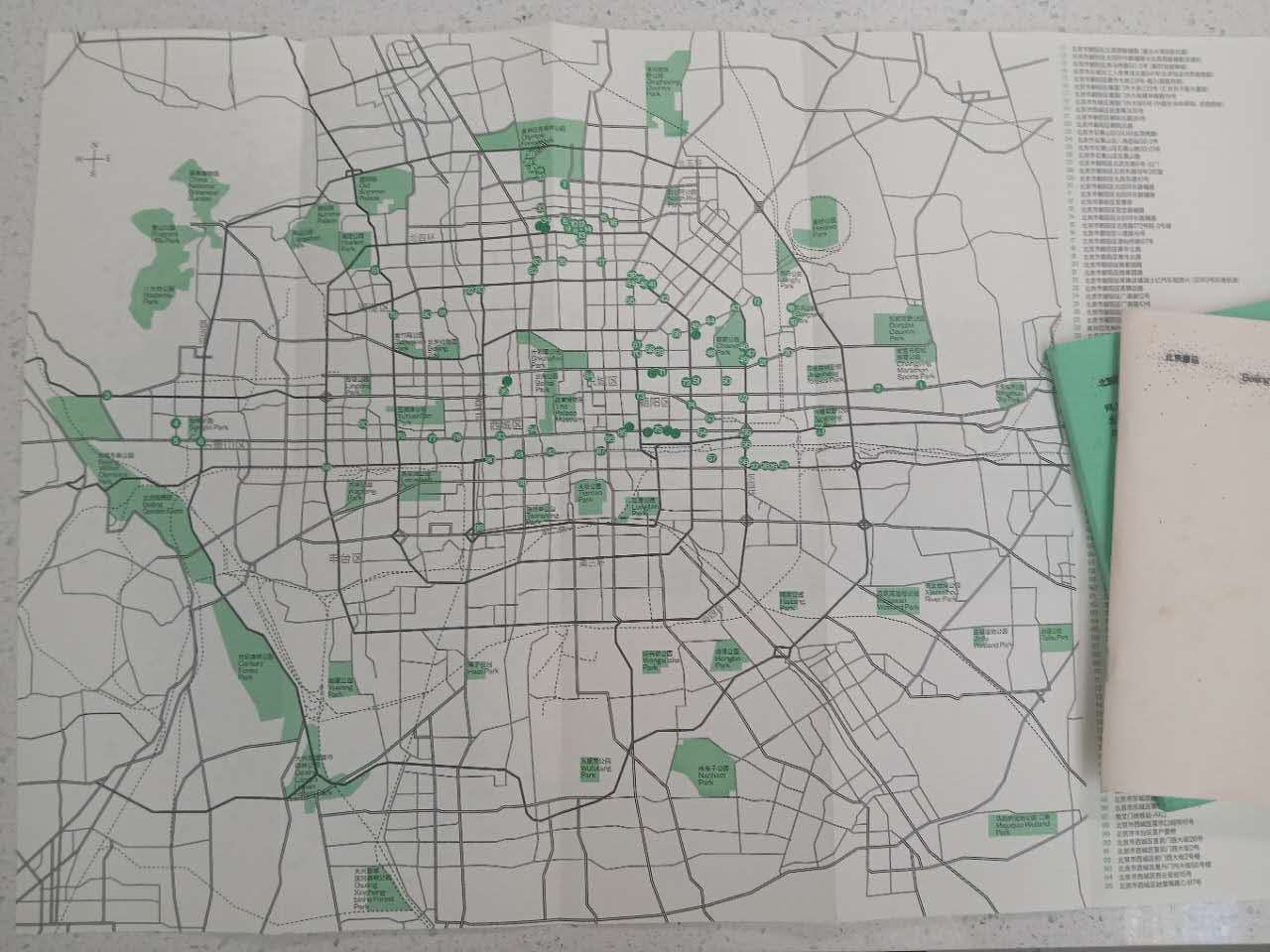
Following this discovery, I noticed several articles in local Chinese media crop up about the vents. The focus was mainly on the Field Guide (which has since sold out due to an influx in demand) but also profiled average people and their experiences with the giant mushrooms of Beijing.
It’s not just big mushrooms, but mini mushrooms too, with an acquaintance reaching out to me with photos of smaller versions of these vents they found around Zuo’anmen (although it was unclear if they were vents or some other form of manhole cover).

And yet, in all this coverage, one thing was consistent: nobody really knows what the purpose of the vents. The text of the Field Book can be found on Beijing22, a long-term project supported by the Goethe Institute China which explores the city’s urban environment.
According to Yu Gong’s text, interest in the mushrooms peaks every fall, with posts cropping up all over Chinese social media featuring the structures.
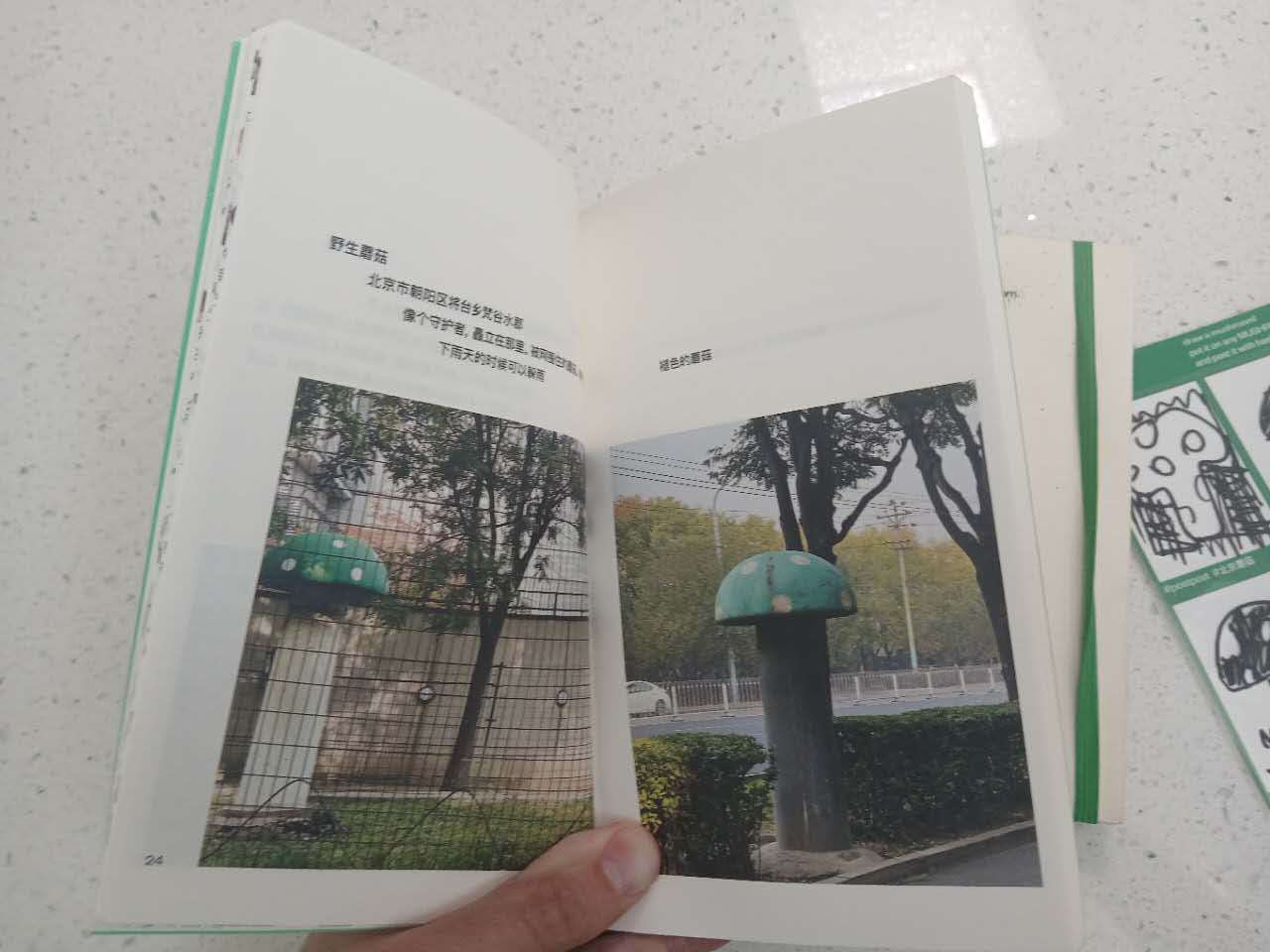
The text goes into detail about one such post from Weibo, with Chinese users speculating as to the mushrooms’ true purpose. One user even goes so far as to claim the vents are meant to protect human beings at night, or else “zombies holding the iron doors will eat my brand new, unused, fresh brain.”
Yu Gong attempts to answer the mystery, explaining that the mushroom vents only “breathe” – letting out scalding hot steam that smells of sulfur, according to one interviewee – in the winter. The article postulates that the mushrooms are somehow connected to the central heating system, seeing as they only “bloom” every winter from November, about the time Beijing’s central heating is turned on.
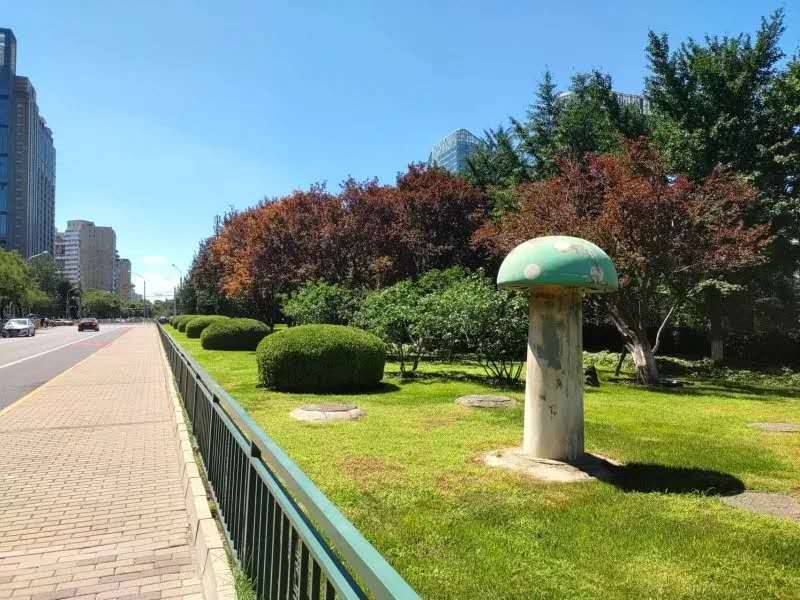
This, or at least the idea that the mushrooms are connected to a heating system of some kind, is backed upby a report from Beijing Daily, in which, when asking city officials about the purpose of the vents, the reporter was told it was to let off water vapor formed by surface water seeping into heat wells under the mushrooms.
Central heating, heating wells, or whatever they might be, the Beijing mushrooms nonetheless an oddity of China’s capital – awakening curiosity whenever they bloom near the end of each year.
Adapted from a piece originally written and published for theBeijinger

 Offbeat Angles_
Leave a comment