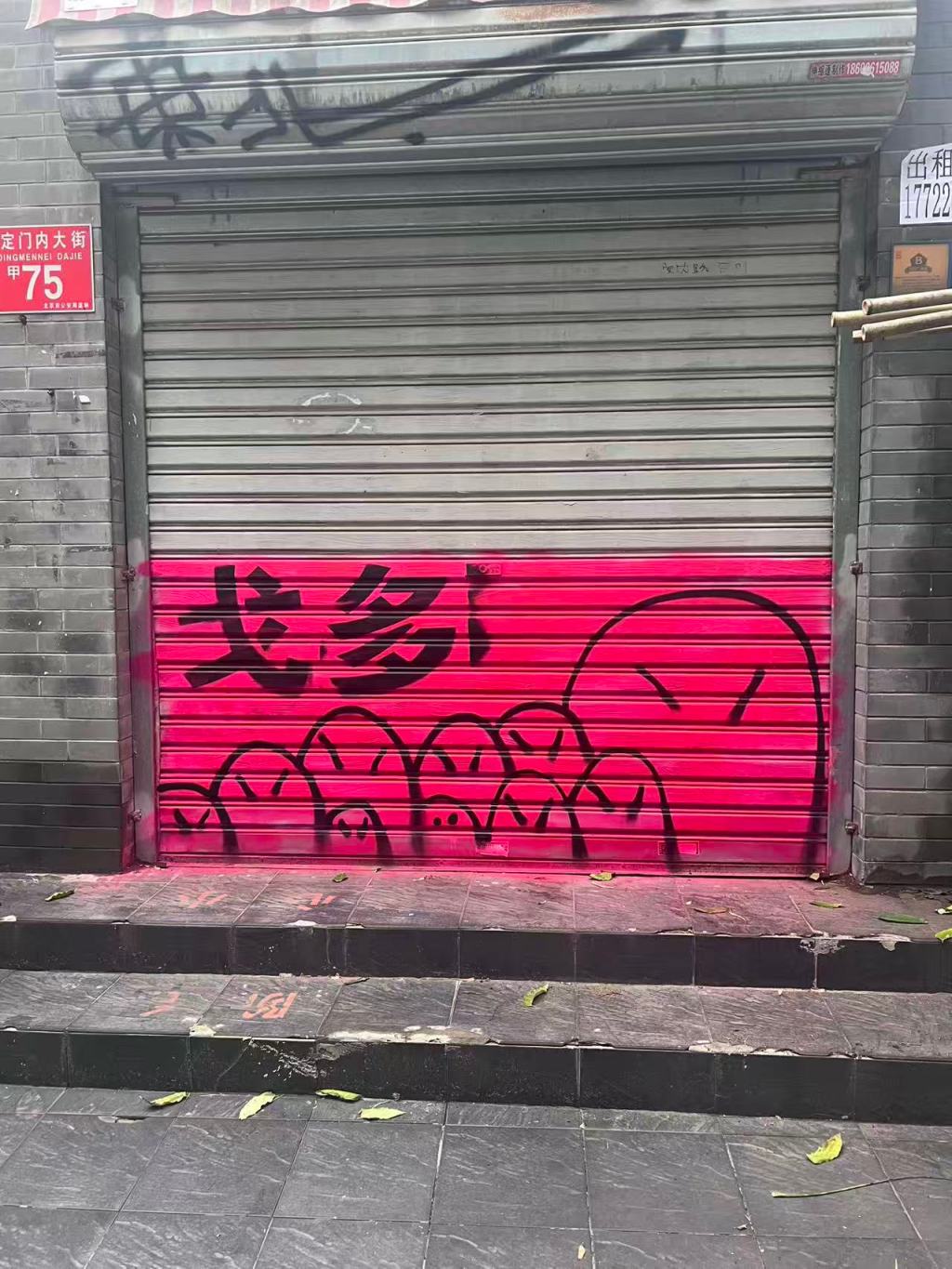
There’s a battle going on in Beijing’s streets. Fought with spray paint and clandestine calligraphy, it’s a war on a smaller scale; one between artists known only for the characters they tag. A graffiti war is underway in China’s capital, one that you might notice if you keep your eyes peeled wandering the hutongs of Dongcheng.
If you’ve been paying attention to my blog enough – shouldn’t be too difficult considering my post schedule – you’ll have noticed that I have a thing for graffiti. This interest was born while wandering Beijing during my tenure there, during which I worked to document as best I could these mandalas of the street.

I was joined in my adventures by Jesse Young, an Australian expat, China video and board games expert, and all-around freelancer based in the heart of the Dongcheng graffiti scene. Even though I’ve departed the city, Young has kept an eye on recent happenings in said scene, which have gotten juicy as of late.
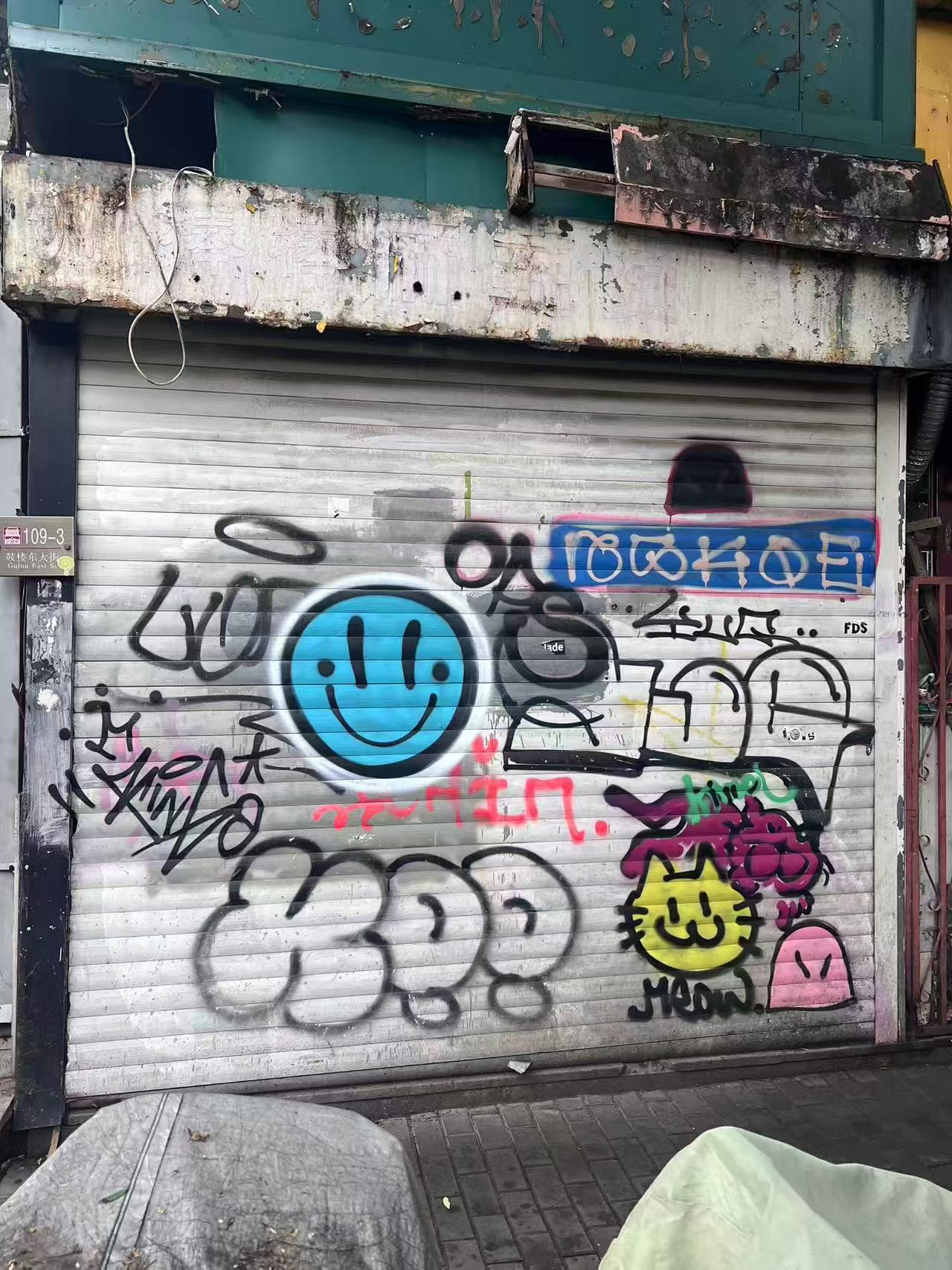
It all started in winter 2024, when we noticed two new tags pop up. One was a simple happy-looking cat face, the other an angry Pac Man ghost of a figure. Both were accompanied by either a “Meow!” or, in the case of the ghost, the phrase “Who will come for Gadot tomorrow?” in Chinese (戈多明天谁来). Thus, we called them Meow and Gadot.
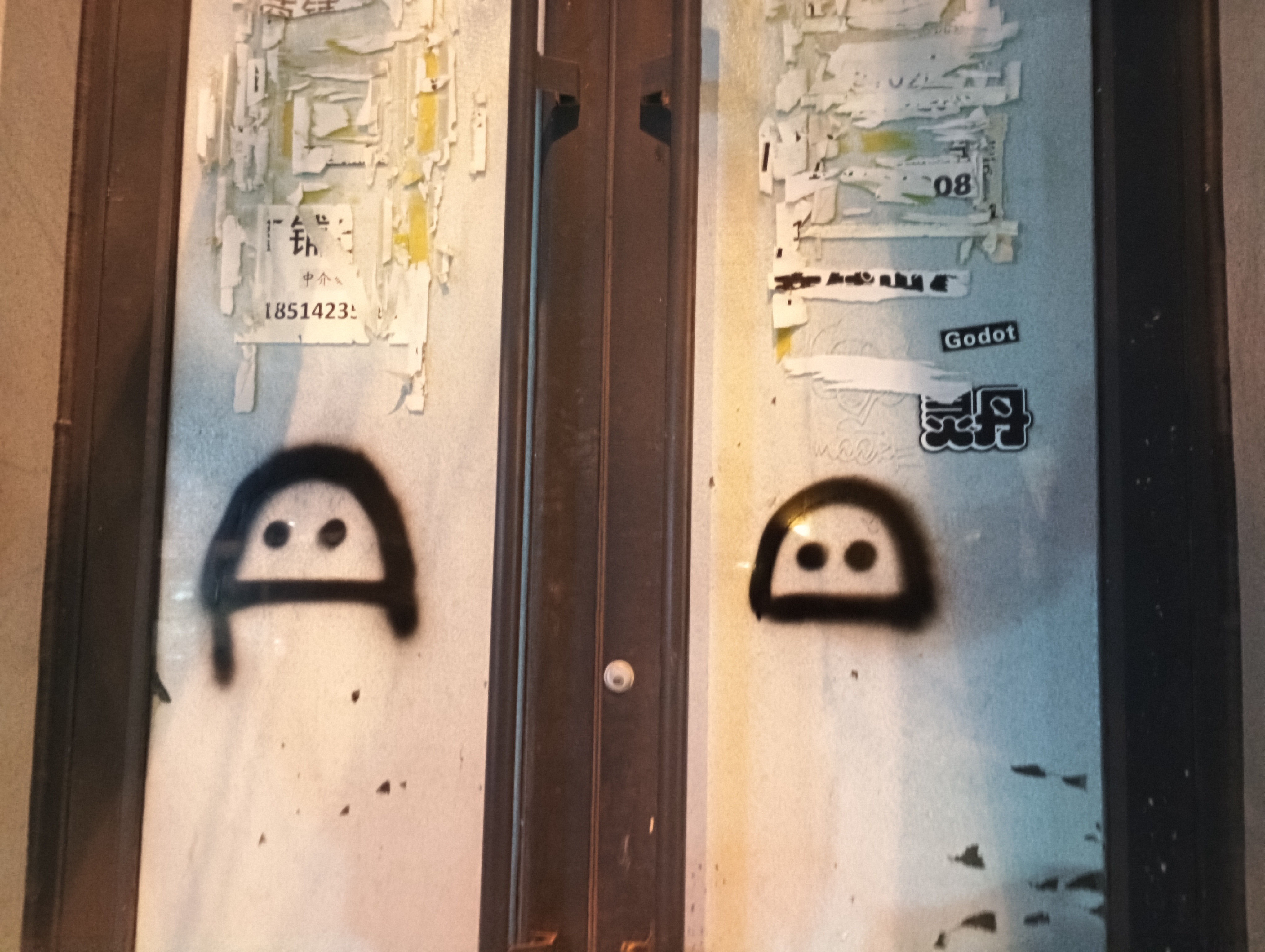
“[Are they the same] writer? A couple? Rivals? Fresh mysteries abound” Young writes of the duo, who he says often appear suggestively together. “They’re prolific. Hitting hard, wide and often… they’re protean too, mixing languages (English/Chinese), paint, markers, stickers, fonts, logos, sizes, styles… the inherent internet age cuteness of Meow playing well against the absurdist sloganeering of Godot.”
Despite their prolific output, there wasn’t much in the way of who the duo were or why they were tagging. The slogan accompanying Gadot referenced Waiting for Gadot, a 1953 Irish play written in French, plus there was the fact that Meow Bar and a café named Waiting for Gadot stood within 800 meters of one another where the action was most pronounced. Tie in a rendition of the play put on by Fengchao Theatre around the time Meow and Godot popped up, and you’ve got a case for guerrilla marketing.
Young wasn’t convinced, though, noting the illegal nature of the tags coupled with heavy monitoring in the capital would’ve gotten the venues in trouble. So, he did some digging online, following a few tags – no pun intended – on Red, China’s version of Instagram. This unearthed a promising lead.
Young found two accounts regularly commenting on posts accompanied by the tag, and when he reached out, they both seemed to confirm with the same short reply that they were Meow and Godot. “I can’t be 100% sure,” he tells me, “but they remain active in commenting on posts around the phenomenon.” Of course, it could also be a group of people, but Young admits he’d have to gain more trust to find out more.
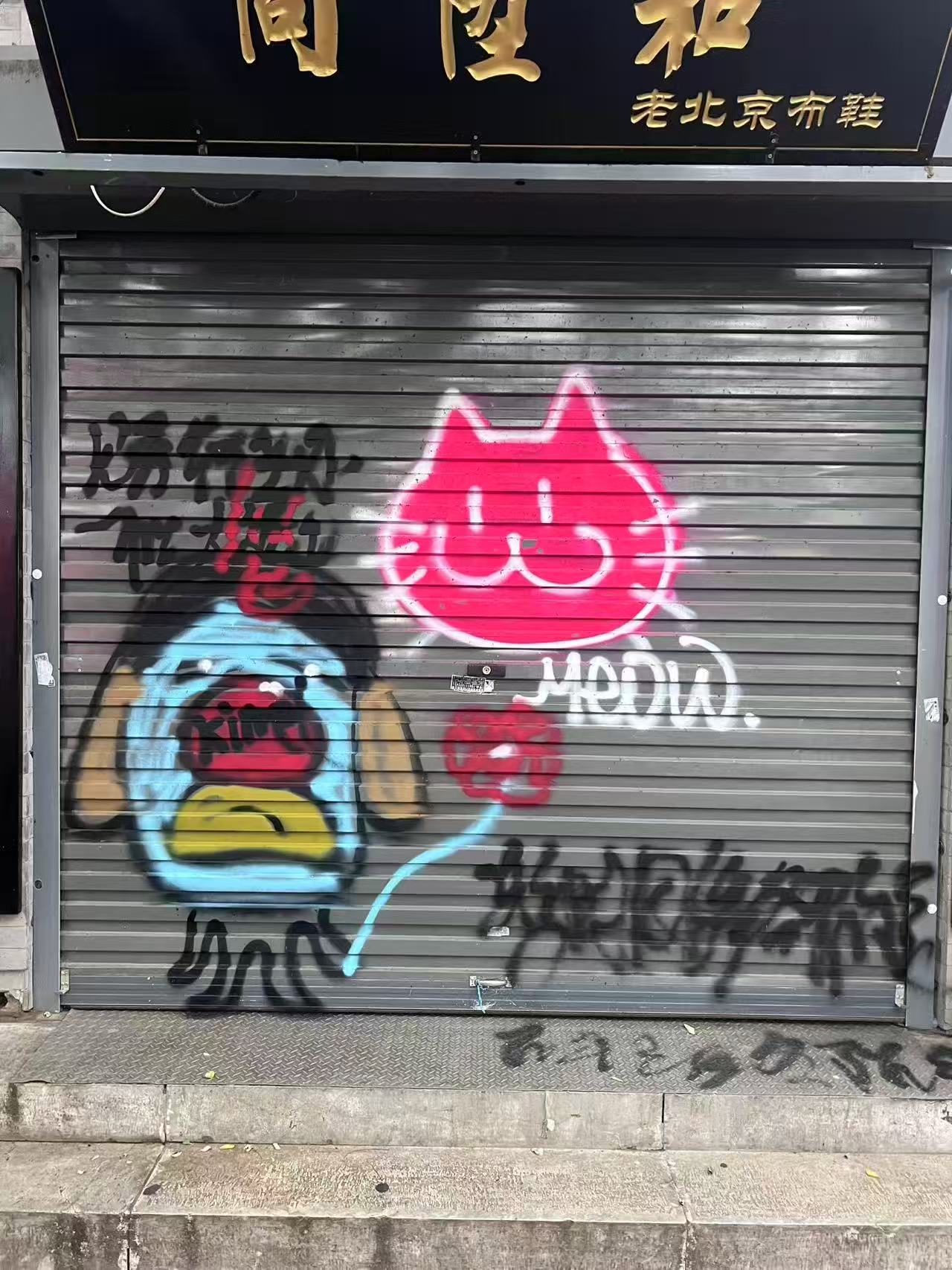
This leads us to the present, and Meow and Godot look to have inspired an arms race, according to Young. “There’s Kimel – which if anything presents as a sad-dog response to Meow. Then there’s a Zelda-looking elf girl which I’m enjoying – it’s a bit of a free-for-all.”
The new competition has been accompanied by another trend: Young has taken note of larger tags by Gadot, with a full-on mural painted over other tags. He messaged me on WeChat with photos (below), saying it could be a tag war of sorts.
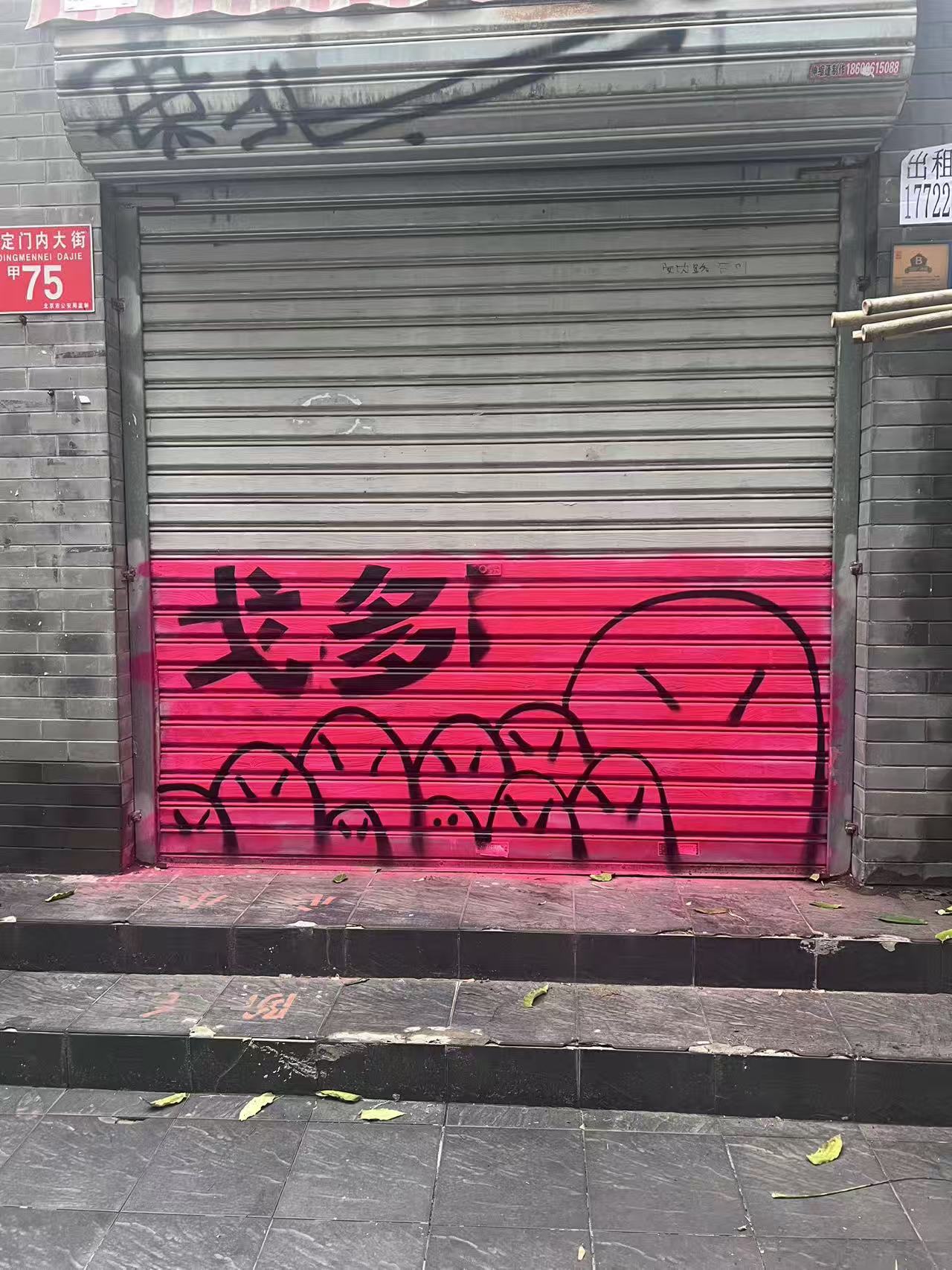
Of course, there’s also the fact that the tags will eventually be painted over. Documenting them is like a game, as the photos and snippets will be all that remains.
Young and I haven’t been the only two to attempt documentation of Beijing’s graffiti. “For those who want to dive further into Beijing graffiti culture there’s the aptly titled Beijing Graffiti by Tom Dartnell and Liu Yuan Sheng,” writes Young. The book is only a small portion of Liu’s catalog, but there’s 25 interviews that add a lot of context.
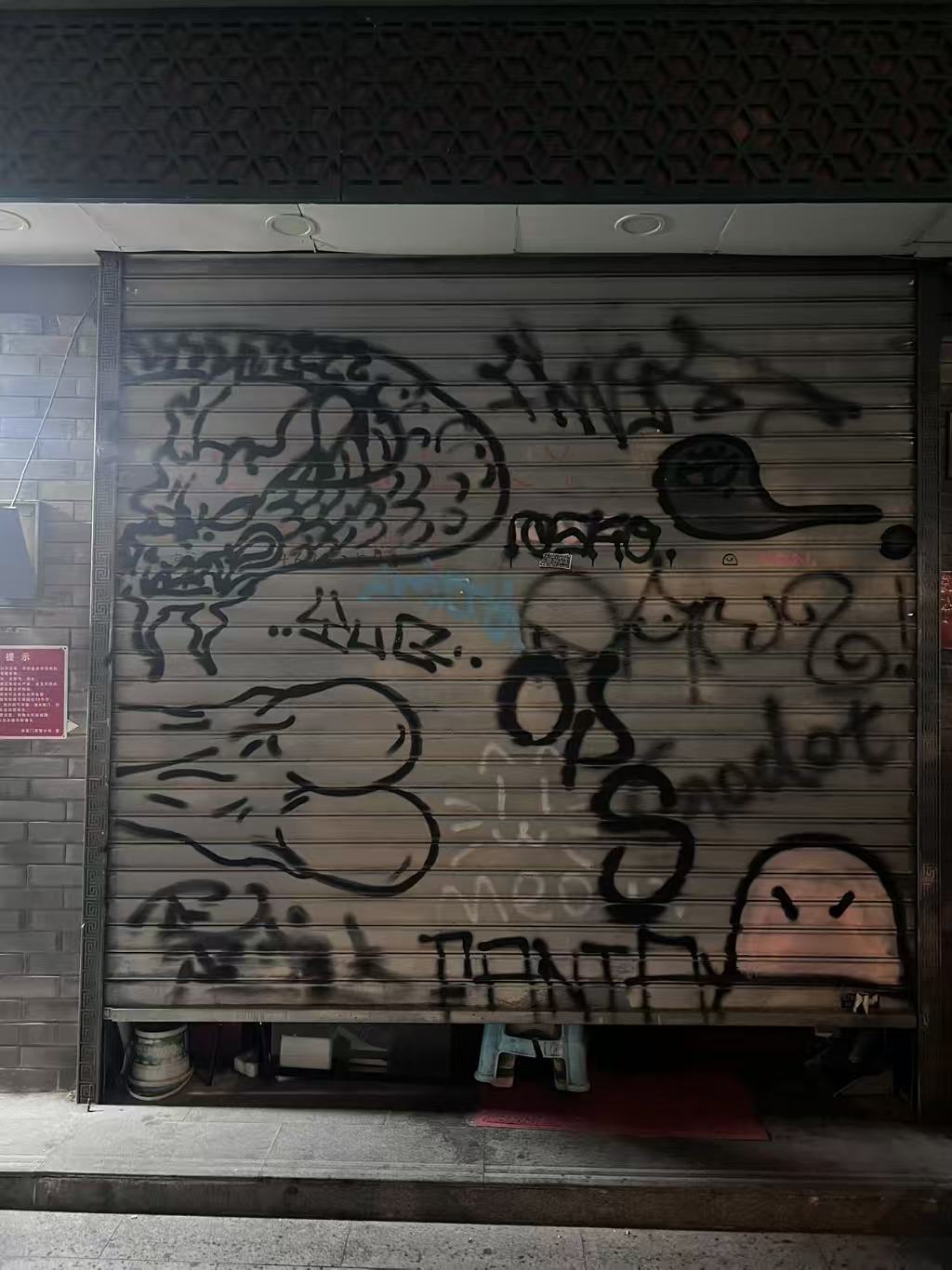
This is best supplemented by an interview of five Beijing street artists by Chinese language lifestyle platform BIE的· (search 北京街头最常出现的图形,和它们背后的人), a 2019 visual guide, and a 2016 documentary titled Spray Paint Beijing, the entirety of which can be found on DailyMotion.
While the scene constantly changes, its little battles like the one between Meow, Godot, other artists, and the powers that be that keep Beijing graffiti interesting. It can be best summed up by a 2014 quote on the official Beijing Tourism website: “Next time you are in Beijing and think the only art to be witnessed is in theCapital Museumor [sic] 798 art district [sic], take a stroll down Gulou East street or around Sahoyaoju and keep your eyes open. You might be surprised at what you see.”
Photos: Vincent R. Vinci, Jesse Young
 Offbeat Angles_
Leave a comment